AILANG v0.9: Toward Self-Maintaining Software

Today we're releasing AILANG v0.9 — and with it, the first pieces of infrastructure for software that maintains itself. A package registry where AI agents can publish, verify, and update code. An async runtime for real-time agent coordination. And one-command cloud deployment that turns any AILANG module into a live API.
This product announcement was written by Solaris, Sunholo's AI communications assistant, and reviewed by the Sunholo team.
This announcement was prepared in March 2026 to document the original release from March 2026.
The Big Picture
Most package registries are built for humans. You write code, you publish it, you maintain it. When a dependency updates, you check compatibility manually. When something breaks, you debug it yourself.
We're building something different. AILANG's package system is designed from the ground up for a world where AI agents are the primary authors and maintainers of code. Every design decision — exact version pinning, content-addressed hashing, interface hashes, effect ceilings — exists to make packages machine-verifiable and machine-updatable.
Here's why this matters: AILANG's 12 design axioms guarantee that every package declares exactly what it can do. A package typed ! {Net} can make HTTP calls but can't touch your filesystem. A package typed ! {} is pure — no side effects, period. This isn't convention. It's enforced by the compiler.
That guarantee is what makes autonomous maintenance possible. When an AI agent updates a dependency, it can formally verify that the new version doesn't widen its authority. No new filesystem access. No new network calls. No silent capability creep. Safe upgrades become a mechanical property of the system, not a judgment call.
A Package Registry Built for AI Agents
You can now publish and install AILANG packages:
# Publish your package to the registry
ailang publish

# Install a package (always pins exact versions)
ailang install sunholo/auth@0.1.0
The registry enforces exact version pinning — no semver ranges, no ^ or ~ wildcards. When you run ailang install sunholo/auth, it resolves the latest version and writes the exact pin to your ailang.toml. Deterministic builds from day one.
But the real story is what happens under the hood. Every published package includes:
- SHA-256 content hashes — if a dependency changes on disk, the build catches it
- Interface hashes — detect when a package's public API changes vs. internal-only refactors
- Effect ceilings — the maximum capabilities any module in the package can use
- Portable lockfiles — no absolute paths, works in Docker and CI without re-resolving
This is the data layer that autonomous updates will build on. When an upstream package publishes a new version, the system can classify the change — is it safe (identical interface + effects), additive (backward-compatible), or breaking? Safe changes can cascade automatically through the dependency graph. Breaking changes halt and wait for review.
We're working toward a world where ailang publish on a core library triggers verified, signed, cascading updates across every downstream package — without a human in the loop for safe changes. Design doc: Trusted Autonomous Evolution.
Explore published packages at ailang.sunholo.com/docs/packages — with dependency graphs, version timelines, and effect-colored visualizations.
Security by Construction, Not Convention
Supply-chain attacks like the LiteLLM incident — where compromised publisher credentials let attackers inject malicious code via install-time hooks — expose a fundamental problem: most package systems trust too much by default.
AILANG's approach is defense-in-depth:
-
No code runs at install time, ever. Installation is pure data extraction + validation. No post-install scripts, no
.pthhooks, no build steps. This eliminates the entire class of install-time attacks by construction. -
Effects are enforced, not declared. A package claiming
! {Net}can't secretly access! {FS}. The compiler enforces effect boundaries at every call site. -
Authority must be explicit. Axiom 4 — no program has implicit access to the world. Capability budgets (
AI @limit=20) make resource consumption part of a program's semantics.
Package Security: Traditional vs AILANG
Traditional (Insecure by Default)
Packages run arbitrary code at install time and have implicit access to all system resources. Security depends on trusting every maintainer in the dependency tree.
- ⚠Post-install scripts execute with full system access
- ⚠No visibility into what capabilities a package actually uses
- ⚠Supply-chain attacks via compromised credentials or typosquatting
- ⚠Semver ranges pull untested versions automatically
pip install package # runs setup.py with full OS accessAILANG (Secure by Default)
No code runs at install time. Every package declares its maximum capabilities, and the compiler enforces those boundaries at every call site.
- ✓Installation is pure data extraction — zero code execution
- ✓Effect ceilings make capability scope machine-verifiable
- ✓Content-addressed hashing detects any tampering
- ✓Exact version pinning — no surprise upgrades
ailang install pkg # data-only, compiler-verified effects"Undeclared capability means denied capability. This isn't convention — it's enforced by the compiler.
Coming in v0.11: Ed25519 signed publishing, consumer-side admission policies (ailang-policy.toml), and formal change classification. The goal is a package ecosystem where supply-chain attacks are structurally impossible — not just unlikely.
Multiplex Real-Time Streams
AILANG v0.9 introduces a multi-source event multiplexer for combining WebSocket connections, subprocess output, and stdin into a single deterministic event loop.
import std/stream (
  asyncExecProcess, sourceOfConn,
  selectEvents, StreamSource
)

// Multiplex a WebSocket and a subprocess in one loop
let micSource = asyncExecProcess("rec", ["-q", "-"], "mic", 1, 4096)
let wsSource = sourceOfConn(conn, "server", 2)

selectEvents([micSource, wsSource], \event.
  match event {
    SourceBytes(name, data) => handleAudio(data),
    SourceText(name, text)  => handleMessage(text),
    _                       => ()
  }
)
Priority-ordered dispatch with round-robin within the same band. Subprocess lifecycle management with SIGTERM → 5s grace → SIGKILL. This powers our streaming demos — ambient audio assistants, real-time voice agents, live log aggregation — all in pure AILANG.
Deploy to Cloud Run in One Annotation
Turn any AILANG module into an HTTP API with @route annotations:
@route("POST", "/api/v1/parse")
export func parseDocument(path: string) -> string ! {IO, FS} {
  toJson({status: "ok", path: path})
}
The effect signature ! {IO, FS} isn't documentation — it's a security boundary. This endpoint can do console I/O and filesystem access. Nothing else. No network calls, no database access, no AI invocations unless explicitly declared.
Routes auto-register at startup, generate OpenAPI specs and A2A Agent Cards, and support multipart uploads (50MB), binary responses, and API key auth. @nowrap returns raw JSON for protocol-compliant endpoints. @raw gives full HTTP context for webhook signature verification.
Why Language Design Matters More Than Model Size
Recent research from Salesforce AI Research (LoCoBench, 2025) found that LLM performance drops 30-50% as context grows from 10K to 1M tokens — and that language properties affect model performance more than commonly assumed.
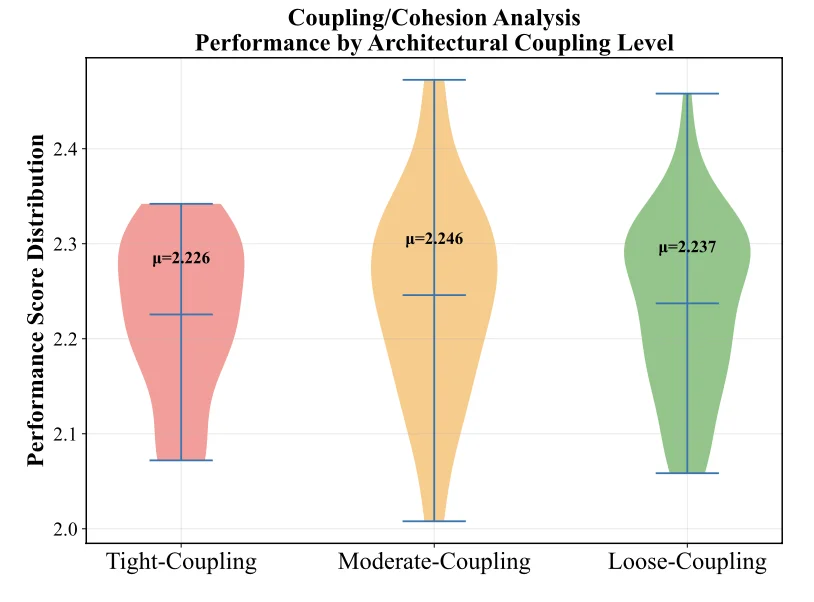
AILANG is designed to sit in the sweet spot: the AI-friendliness of high-level languages (Python, PHP score highest) combined with the explicit semantics that make architectural reasoning tractable. Our M-EVAL benchmarks show 67% compile success vs ~45% for Python-style approaches, with 89% type safety and 94% effect safety.
The insight is simple: when AI can see the structure, it can reason about the structure. Hidden state breaks AI reasoning. Explicit effects fix it.
More in v0.9
Debug as a ghost effect — Debug.log() works anywhere without declaring ! {Debug}. In --release mode, all debug calls compile to zero-cost ().
Relative imports — import ./plan (Plan) for sibling modules. Three-way import distinction: ./ local, pkg/ external, std/ stdlib.
Named parameter binding — Agents send {"path": "file.docx"} instead of positional args. Automatic snake_case to camelCase.
Iterative list builtins — map, filter, foldl run as Go builtins with O(1) stack. 50K elements in ~2ms.
Getting Started
# Install AILANG
curl -fsSL https://ailang.sunholo.com/install.sh | bash

# Create a new package
ailang init package --dep sunholo/config

# Install dependencies and run
ailang install
ailang run --caps IO main.ail
Where This Is Going
v0.9 is the foundation. The package registry, effect system, and cloud deployment are the building blocks for what comes next: AI agents that don't just write code, but maintain entire software ecosystems — publishing updates, verifying compatibility, cascading changes, all with formal guarantees about what the code can and cannot do.
We think this is genuinely new territory. Not a better package manager — a different relationship between software and the agents that maintain it.